September 7, 2026 Post by : Editorial Glacial Sediments
The Geography of U-Shaped Valleys: How Glaciers Carve Mountains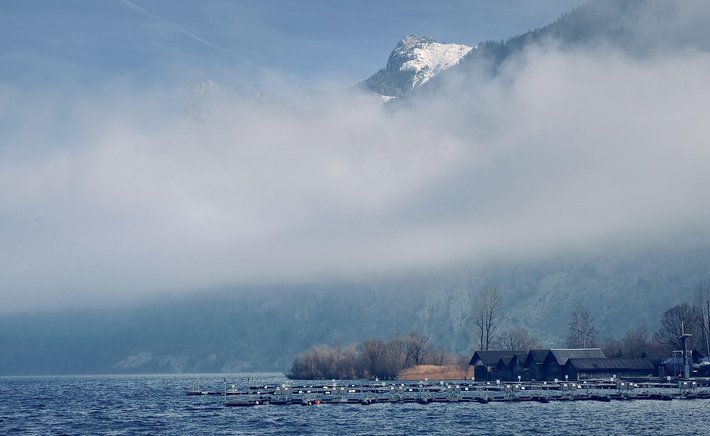
Some of the most precise records of past glacial environments are not found in ice cores or tree rings, but in the muddy bottoms of lakes. Varves are annual layers of sediment that form in lakes fed by glacial meltwater. Each varve consists of two distinct parts: a light-coloured layer of coarse silt and sand deposited during the spring and summer melt season, and a dark-coloured layer of fine clay deposited during the winter when the lake is frozen and quiet. Together, these layers record one year of sedimentation, and counting them is like reading a natural calendar.
The light layer, sometimes called the summer layer, forms when meltwater streams carry sediment into the lake. The coarser particles settle out quickly near the shore or in the deeper parts of the lake, depending on the current. The dark layer, or winter layer, forms when the lake surface freezes and the inflow of meltwater stops or slows dramatically. Only the finest clay particles remain suspended long enough to settle, and because they are often mixed with organic matter, they appear dark. The contrast between the two layers is usually sharp enough to see with the naked eye in a core sample.
Why Varves Matter for Dating
Varves are valuable because they provide a continuous, annual record of environmental change. By counting varves in a sediment core, researchers can establish a chronology that extends back thousands of years, sometimes beyond the range of radiocarbon dating. This is particularly useful in areas that were covered by ice sheets, where other dating methods may be less reliable. Varves can also be matched between lakes, creating a regional chronology that helps geographers understand the timing of deglaciation.
The thickness and composition of varves also carry information about climate and glacier behaviour. Thick summer layers suggest warm summers with abundant meltwater and high sediment supply, while thin layers suggest cool summers with less melting. Dark winter layers that are unusually thick may indicate mild winters with more clay input, or they may reflect changes in lake circulation. By analysing these patterns, scientists can reconstruct past variations in temperature, precipitation, and glacier size.
Varves Beyond the Laboratory
Varves are not just a scientific curiosity. They are also a teaching tool that connects geology, geography, and climate science. In a classroom, a simple jar of water and sediment can demonstrate how layers form, and a photograph of a varve core can spark discussion about how we know what ancient environments were like. In the field, a sediment core from a glacial lake can reveal a history that stretches back to the last ice age.
For anyone interested in glacial landforms, varves are a reminder that not all evidence is written in the shape of the land. Some of the most detailed records are buried in the quiet depths of lakes, layer by layer, year by year. They are a slow, patient archive of meltwater, frost, and time, and they continue to accumulate today in lakes fed by modern glaciers. Reading them is one of the ways we link the living ice of the present with the vanished ice of the past.
Author
22 feb,2025
This incident opened my eyes to the value of Insurance in general, so I decided to examine my personal and business insurance.

Comment (3)
The payments are made directly from one person to another without passing through a central bank or clearing house.
22 feb,2025
ReplyWhy Ireland Is Covered in Drumlins: A Case Study in Ice Sheet Retreat
23 feb,2025
ReplyMeltwater Channels: The Rivers That Ran on Top of Ice Sheets
23 feb,2025
Reply