September 16, 2026 Post by : Editorial Mountain Glaciation
Varves: Counting Ancient Summers in Layered Lake Sediments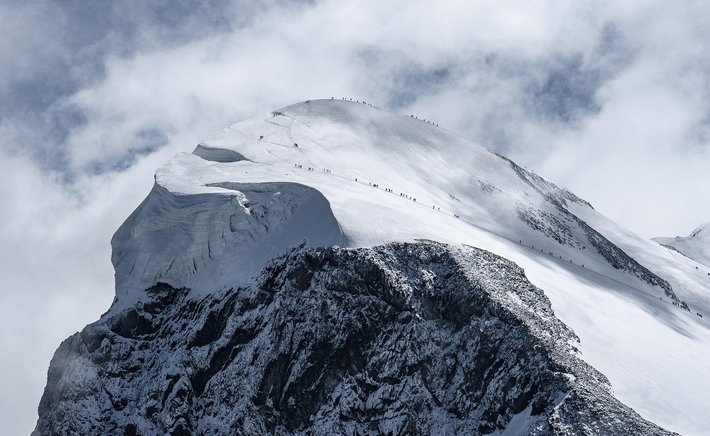
High on many mountain ranges, you can find a curious landform: a steep-walled, bowl-shaped hollow that looks almost like a giant armchair carved into the mountainside. This is a cirque, and it is where many mountain glaciers begin. A cirque forms where snow accumulates in a sheltered hollow year after year, compressing into ice and slowly eating away at the rock beneath and around it. The result is a distinctive amphitheatre shape, with a steep back wall, a curved basin floor, and often a lip or threshold at the downhill edge.
The process starts with snow patches that survive the summer. As they thicken and turn to ice, the ice begins to creep downhill under its own weight. At the base of the snow patch, meltwater refreezes in cracks in the rock, prying fragments loose, while the ice itself plucks and abrades the bedrock. Over centuries, this combination of frost shattering and glacial erosion deepens the hollow and steepens its headwall. The cirque grows backward into the mountain, sometimes producing a sharp, jagged ridge called an arête where two cirques on opposite sides meet.
How Cirques Reveal Past Climate
Cirques are valuable to geographers because they mark the elevation at which snowline once sat. During colder periods, cirques formed at lower altitudes; during warmer periods, they were confined to higher ground. By mapping the lowest cirques in a mountain range, researchers can estimate how far the regional snowline dropped during past glaciations. This makes cirques a kind of climate archive written in rock and shape rather than in ice cores or sediment layers.
The size and orientation of cirques also tell us about prevailing winds and sun exposure. In many ranges, cirques cluster on the shaded, leeward sides of ridges, where snow accumulates most readily. North-facing cirques are common in the Northern Hemisphere for this reason. When several cirques ring a single peak, they can sculpt it into a sharp, pyramid-like summit known as a horn, of which the Matterhorn is a famous example.
Cirques in the Landscape Today
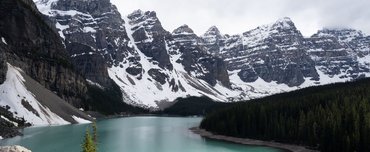
Once the ice disappears, a cirque often becomes a striking feature in its own right. Many hold small lakes, called tarns, which fill the overdeepened basin behind the cirque lip. These tarns are often crystal clear and cold, fed by snowmelt and surrounded by steep walls. Others contain bogs or meadows where sediment has slowly accumulated. The flat or gently sloping floor of a cirque can also provide a rare patch of level ground in an otherwise steep mountain environment, sometimes used for grazing or mountain huts.
For hikers and students of geography alike, cirques are worth noticing because they explain so much about mountain scenery. They account for the bowl-shaped hollows below ridgelines, the sharp arêtes between valleys, and the horn-like peaks that draw climbers and photographers. They also remind us that glaciers are not only rivers of ice that carve valleys, but also localised agents of erosion that begin in small, sheltered pockets high on the mountain. The next time you rest beside a mountain tarn, look up at the walls surrounding you: you are sitting inside the cradle of an ancient glacier.

Author
22 feb,2025
This incident opened my eyes to the value of Insurance in general, so I decided to examine my personal and business insurance.
Comment (3)
The payments are made directly from one person to another without passing through a central bank or clearing house.
22 feb,2025
ReplyCirques: The Armchair-Shaped Hollows Where Glaciers Are Born
23 feb,2025
ReplyKettle Lakes and Kames: Reading a Stagnant Ice Landscape
23 feb,2025
Reply